




N-acetylneuraminic acid, also known as sialic acid, is a nine-carbon monosaccharide with the CAS number 131 - 48 - 6. It is widely distributed in nature and plays a crucial role in various biological processes, including protein metabolism. As a reliable supplier of N - acetylneuraminic acid, I am excited to delve into the detailed role of this compound in protein metabolism.
1. Structure and General Properties of N - acetylneuraminic acid
N - acetylneuraminic acid has a unique chemical structure. It contains a carboxyl group at the end of its carbon chain, which gives it acidic properties. This structure allows it to participate in a variety of chemical reactions and interactions within biological systems. It is often found at the terminal positions of glycoproteins and glycolipids on the cell surface, where it can mediate cell - cell recognition, adhesion, and signaling.
2. N - acetylneuraminic acid in Protein Glycosylation
One of the most significant roles of N - acetylneuraminic acid in protein metabolism is its involvement in protein glycosylation. Glycosylation is a post - translational modification process in which carbohydrate chains are attached to proteins. N - acetylneuraminic acid is commonly added to the non - reducing ends of these carbohydrate chains.
- Stability and Protection of Proteins: The addition of N - acetylneuraminic acid to proteins can enhance their stability. It forms a hydrophilic and negatively charged layer on the protein surface, which can prevent the protein from being recognized and degraded by proteases. For example, in serum glycoproteins, the sialylated structure can protect these proteins from rapid clearance by the liver. This is because the asialoglycoprotein receptor in the liver recognizes and takes up desialylated glycoproteins for degradation. The presence of N - acetylneuraminic acid masks the recognition sites on the protein, thus prolonging the half - life of the protein in the bloodstream.
- Modulation of Protein Function: Glycosylation with N - acetylneuraminic acid can also modulate the biological function of proteins. For instance, in some membrane - bound receptors, sialylation can affect their ligand - binding affinity and the subsequent intracellular signaling pathways. The negatively charged N - acetylneuraminic acid residues may influence the electrostatic interaction between the receptor and its ligand, thereby regulating the signal transduction process.
3. Role in Protein Trafficking
Protein trafficking is the process by which proteins are transported to their appropriate subcellular locations or secreted outside the cell. N - acetylneuraminic acid plays a role in this process as well.
- Targeting of Proteins: Sialylated proteins can be recognized by specific lectins or receptors in the cell, which guide their proper trafficking. For example, some sialylated lysosomal enzymes are targeted to lysosomes through a specific receptor - mediated pathway. The sialic acid residues on these enzymes serve as recognition signals for the receptor, ensuring that the enzymes are delivered to the correct subcellular compartment for their normal function.
- Secretion of Proteins: In the process of protein secretion, sialylation can also influence the efficiency of secretion. The carbohydrate chains containing N - acetylneuraminic acid can affect the folding and aggregation of proteins in the endoplasmic reticulum and Golgi apparatus. Proper sialylation is often required for the correct assembly and secretion of proteins.
4. Interaction with Proteolytic Enzymes
N - acetylneuraminic acid can interact with proteolytic enzymes in several ways, which impacts protein metabolism.
- Inhibition of Proteolysis: As mentioned before, the presence of N - acetylneuraminic acid on proteins can inhibit proteolysis. The negatively charged sialic acid residues can create a steric and electrostatic barrier around the protein, preventing proteases from accessing the cleavage sites. This is important for maintaining the integrity and function of many bioactive proteins in the body.
- Activation of Specific Proteases: In some cases, sialylated proteins can serve as substrates for specific proteases. For example, certain viral neuraminidases can cleave the N - acetylneuraminic acid residues from the surface of cells. This not only helps the virus to detach from the infected cell but may also activate some host proteases, leading to a cascade of proteolytic events that can affect the overall protein metabolism in the infected cell.
5. Impact on Protein - Protein Interactions
N - acetylneuraminic acid can also affect protein - protein interactions, which are crucial for many biological processes.
- Cell - Cell Adhesion: On the cell surface, sialylated glycoproteins can act as adhesion molecules. The interaction between sialylated proteins on different cells can mediate cell - cell adhesion, which is important for tissue formation, immune response, and development. For example, in the immune system, the interaction between sialylated proteins on lymphocytes and endothelial cells is involved in the process of lymphocyte homing to lymphoid tissues.
- Assembly of Protein Complexes: Sialylation can influence the assembly of protein complexes. The carbohydrate chains with N - acetylneuraminic acid can provide additional binding sites or affect the conformation of proteins, thereby promoting or inhibiting the formation of protein complexes. This can have a significant impact on the function of these complexes, such as in the case of multi - subunit enzyme complexes.
6. Relationship with Other Functional Food Raw Materials
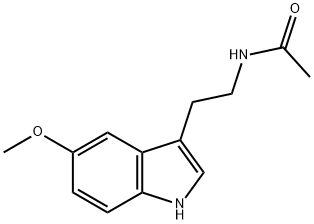
In the field of functional food, N - acetylneuraminic acid often works in combination with other raw materials to promote overall health. For example, it can be used in conjunction with Melatonine, which is involved in regulating the sleep - wake cycle. The combination of these two substances may have potential benefits for improving cognitive function and sleep quality.


Phosphatidylserine is another important functional food raw material. It is related to cognitive function and memory. When combined with N - acetylneuraminic acid, they may work synergistically to enhance neural development and function.
Pyrroloquinoline Quinone Disodium Salt is known for its antioxidant and mitochondrial - enhancing properties. The combination of N - acetylneuraminic acid and this compound may have positive effects on energy metabolism and overall health.
BETA - Nicotinamide Adenine Dinucleotide Phosphate Disodium Salt(BETA - NADP - 2Na);CAS NO.: 24292 - 60 - 2 is involved in many redox reactions in the cell. It can work with N - acetylneuraminic acid to support cellular metabolism and function.
Stevioside is a natural sweetener. In some functional food formulations, it can be combined with N - acetylneuraminic acid to provide a better - tasting and healthier product option.
7. Conclusion and Call for Purchase
In conclusion, N - acetylneuraminic acid plays a diverse and crucial role in protein metabolism. From protein glycosylation and trafficking to its interaction with proteolytic enzymes and protein - protein interactions, it has a profound impact on the structure, function, and stability of proteins. As a trusted supplier of high - quality N - acetylneuraminic acid (CAS NO. 131 - 48 - 6), we are committed to providing the best products for your research, functional food production, or other related applications. If you are interested in purchasing N - acetylneuraminic acid or would like to discuss potential partnerships, please feel free to reach out. We look forward to serving you and helping you achieve your goals in the field of protein metabolism and related research.
References
- Varki, A. (1992). Biological roles of oligosaccharides: all of the theories are correct. Glycobiology, 2(2), 105 - 120.
- Schauer, R. (2009). Sialic acids as regulators of molecular and cellular interactions. Current Opinion in Structural Biology, 19(5), 590 - 595.
- Kelm, S., & Schauer, R. (1997). Sialic acids in molecular and cellular interactions. Angewandte Chemie International Edition, 36(1 - 2), 125 - 142.